At a glance
- Watch the sun sink behind limestone karsts as day boats depart. The sea at sunset transforms the bay into a canvas of amber and rose before darkness falls.
- Near the equator, dusk lasts minutes, not hours. Full darkness arrives swiftly, turning the bay into an intimate, quieter realm within the 8-hour tour window.
- As crowds vanish, the bay reveals its nocturnal magic. Glowing plankton ignite with each paddle stroke, creating an otherworldly light show in the darkness.
- Expert crews guide sea canoes through limestone channels after sunset using intimate knowledge of the bay. Safety equipment ensures secure passage in low-light conditions.
- With the day boats gone, Phang Nga Bay becomes peaceful and spellbound. Stars multiply overhead as the sea calms, revealing a landscape most visitors never witness.
The Hour the Day Boats Turn Back
By 4:30 p.m., the speedboats carrying hundreds of day-trippers begin their return run across Phang Nga Bay toward Phuket. The water, churned all day by engine wakes, settles. The limestone towers that define this Ramsar-protected landscape cast long shadows across the bay, and the light takes on the heavy amber quality that signals the equatorial evening is minutes away, not hours. This is when the bay transforms. The noise of commercial tourism recedes, the echo of voices bounces less frequently off the karst walls, and the islands begin to feel genuinely remote again.
On this 8-hour tour, timing is deliberate. Your sea canoe departs the main channels as the last group boats leave, placing you in the bay's quiet heart as the transition begins. The water temperature, warm all day at around 28-29°C, begins its subtle shift downward as the sun loses its direct overhead intensity. You'll notice it first not as cold, but as a change in how the water feels against your hands when you trail them from the boat's edge.
Sunset Behind the Limestone Towers
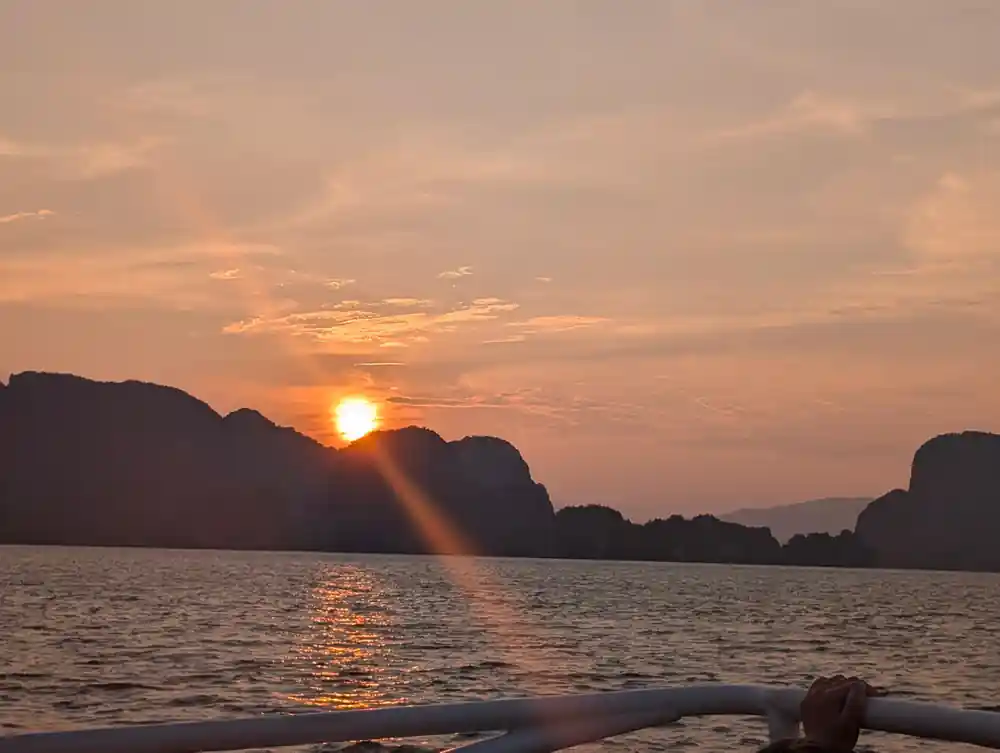
The sun doesn't linger near the equator. Between 6:00 and 6:30 p.m., it drops behind Phang Nga Bay's most dramatic towers, turning them into silhouettes that grow sharper and darker with each passing minute. The towers themselves, ancient karst formations rising anywhere from 80 metres to about 300 at the tallest, become the frame through which you watch the light change. The sky above transitions through orange, then pink, then the deepest amber, while the water below mirrors these colors with decreasing clarity as the surface light fades.
The sunset here has none of the slow fade familiar to those accustomed to temperate latitudes. The sun moves visibly, perceptibly, dropping below the horizon in what feels like a sudden plunge. By 6:45 p.m., full twilight has arrived. The color palette shifts from warm to cool within this window, and stars begin appearing overhead even as the sky retains a deep blue band along the horizon. This speed of transition is one of the defining characteristics of travel near the equator, where the sun's path is nearly vertical rather than shallow and angled.
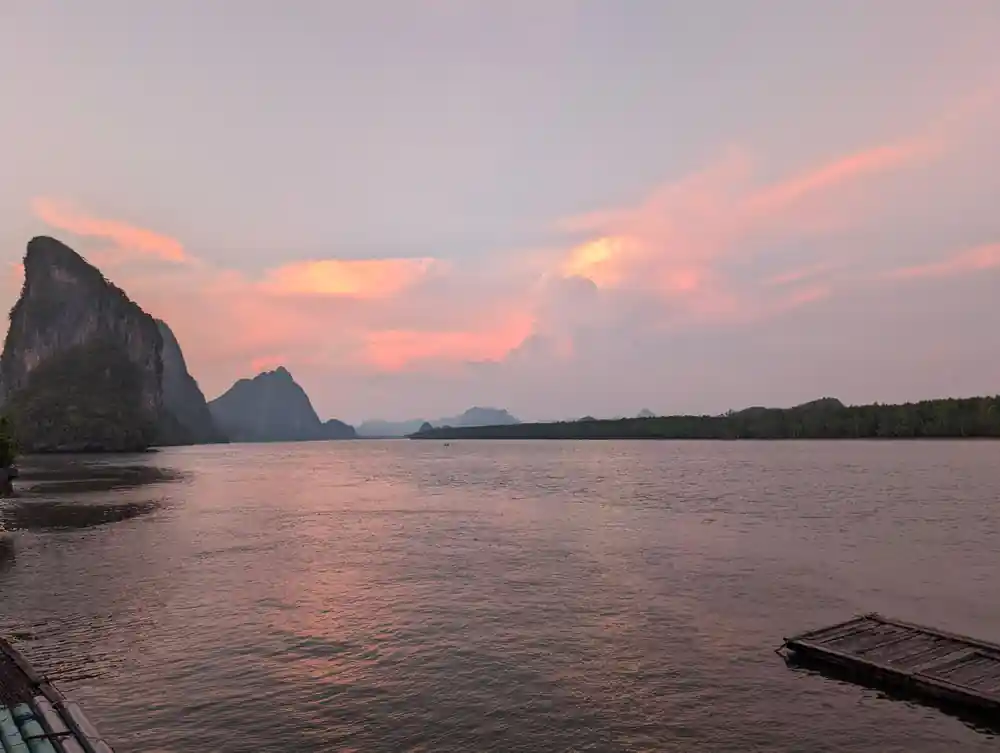
Limestone towers fade to silhouettes as twilight surrenders to tropical night
The Speed of Tropical Darkness
Twilight lasts approximately 20 to 25 minutes in this part of Thailand. Between 6:45 and 7:10 p.m., the bay transitions from dusk to near-complete darkness. This is not gradual in the way Northern Hemisphere visitors might expect. The light doesn't slowly drain; it recedes like a tide. Stars that were faint dots become clear points of light. The limestone islands transition from visible landmarks to dark shapes defined only by the sky's remaining luminescence around their edges.
By 7:15 p.m., your crew navigates by instruments, local knowledge, and the stars themselves. The water remains warm, around 27°C, and the air temperature hovers near 25°C, creating that tropical evening comfort that brings no relief from heat but simply a change in how the body experiences it. Your eyes adjust within ten minutes of true darkness, and the bay reveals itself differently: not as a landscape but as a collection of sounds, water temperature, and the occasional phosphorescent disturbance in the depths below.
The Sounds of Empty Islands After Sunset
As darkness completes itself, the character of sound changes entirely. During daylight, the bay carries the metallic echo of speedboat engines, human voices bouncing off stone, the squawk of tour guides' megaphones. After 7:30 p.m., the primary sounds are water lapping against limestone, the creak of your sea canoe's frame, and the calls of nocturnal birds that inhabit the karst caves. The islands feel emptied not because people have left them, but because the daytime tourism infrastructure has switched off.
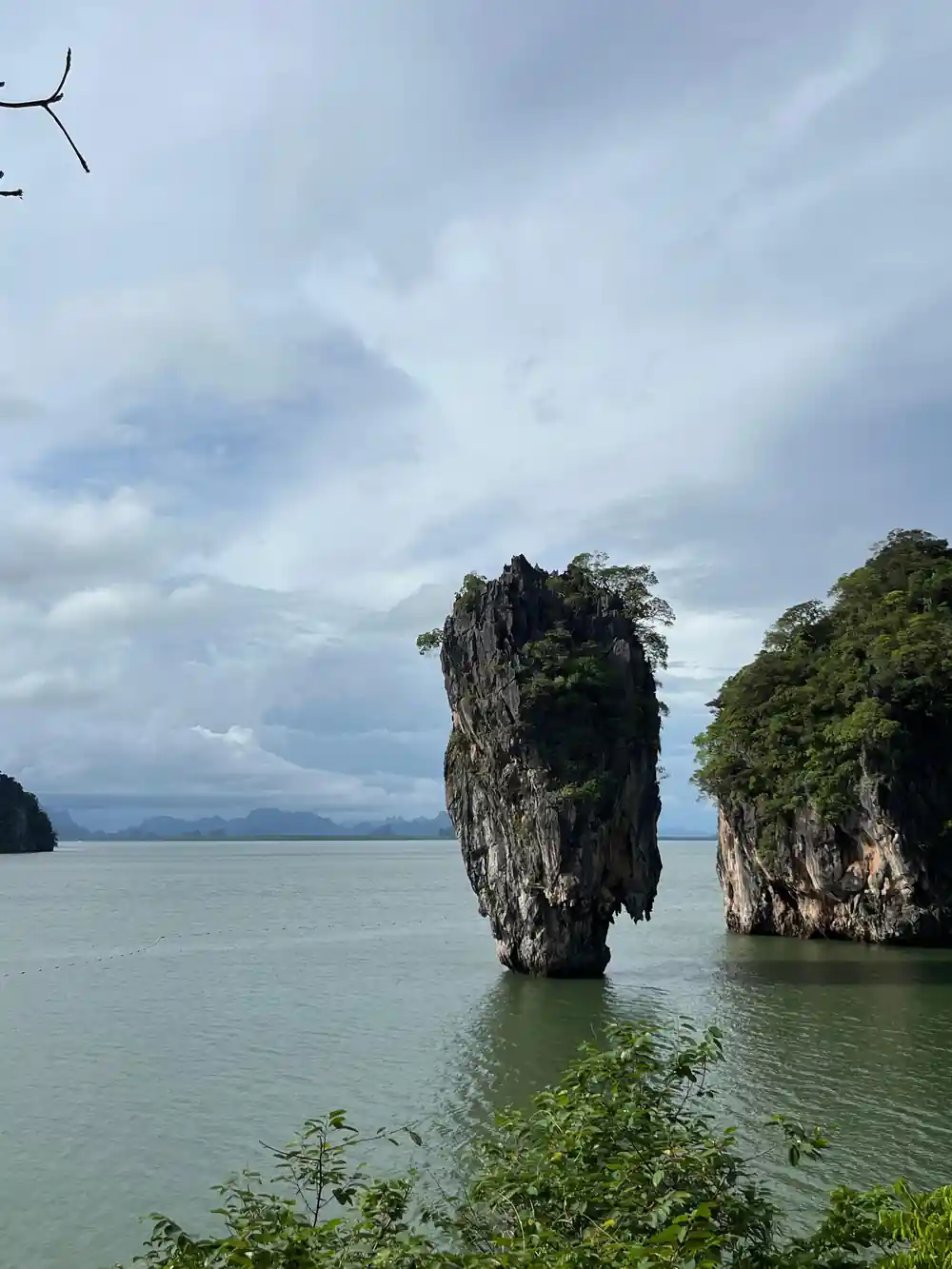
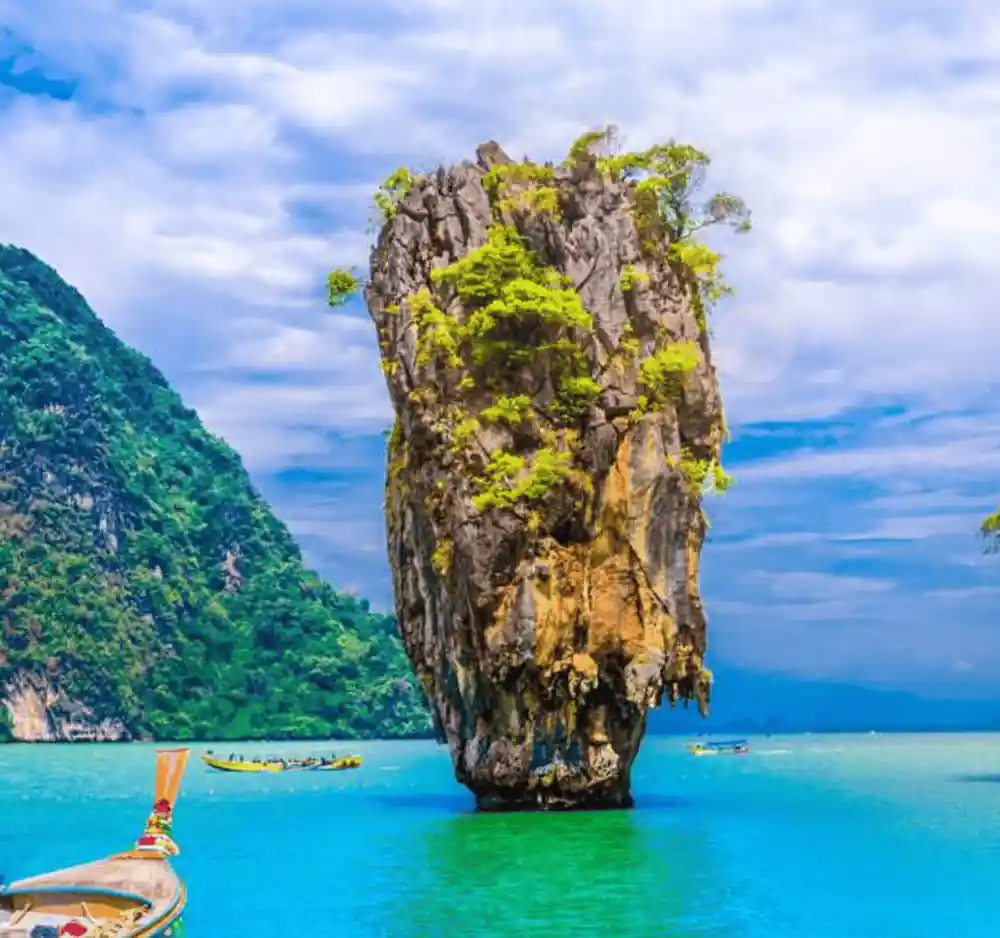
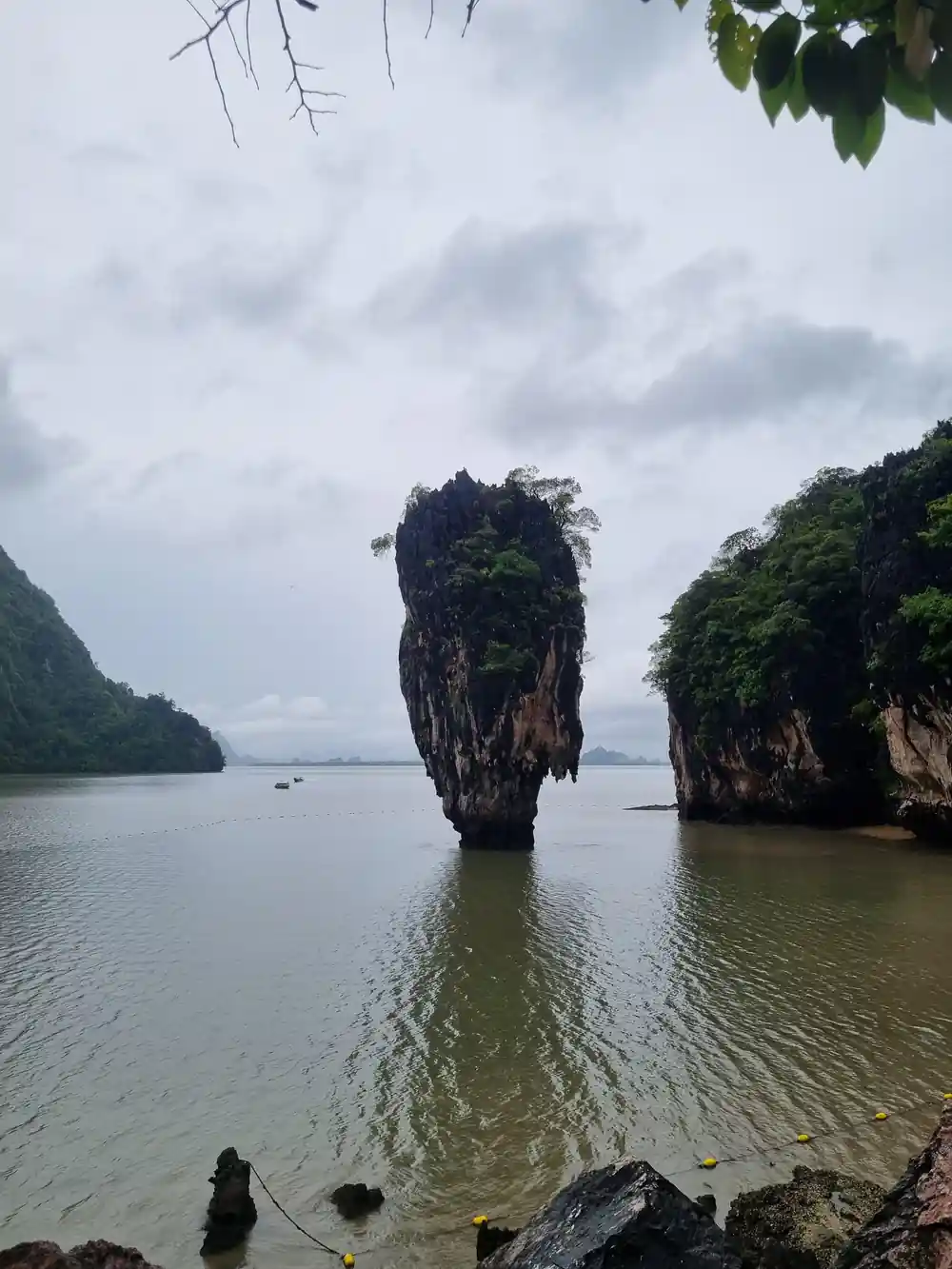
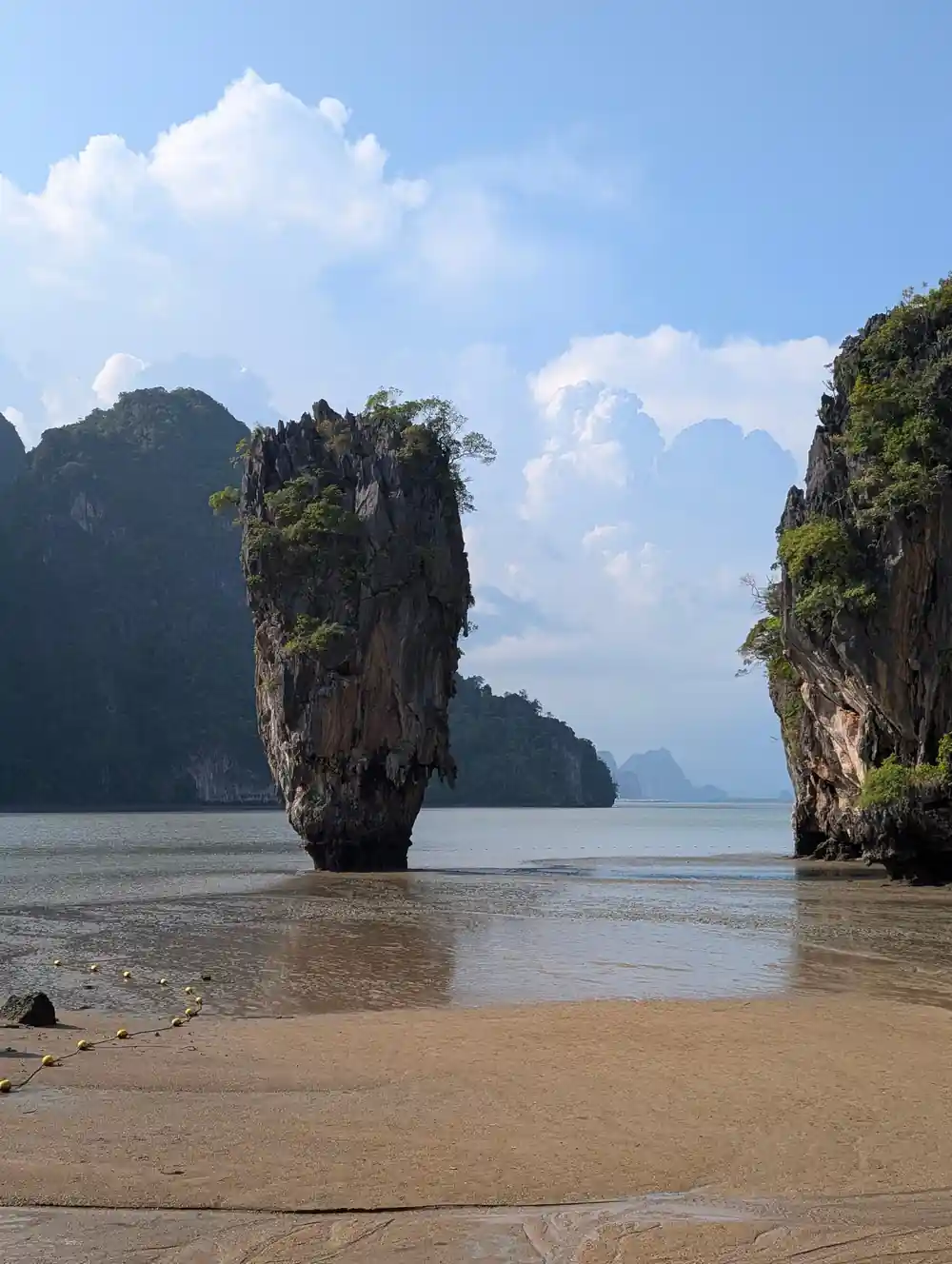
The sense of solitude is genuine. Panak Island, Ko Hong, and the cluster of smaller towers around James Bond Island are unlit, unvisited by the commercial boats now safely docked in Phuket. The crews navigate from memory and instruments, and passengers experience the bay as it exists when tourism ceases. This emptiness is part of the appeal: you are seeing a nationally protected landscape in a state closer to how it exists when no visitors are present at all.
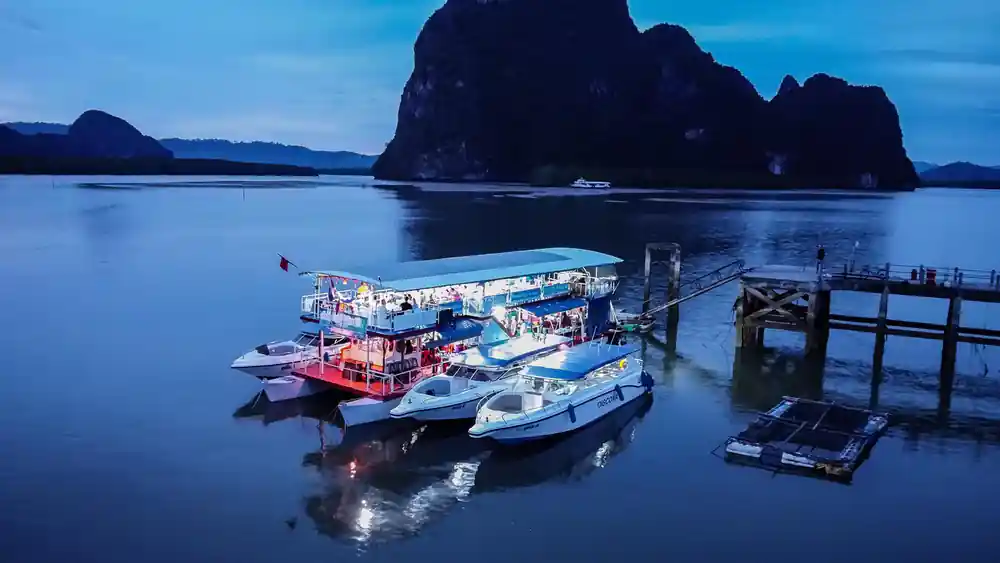
Stars and Night Navigation Over Phang Nga
By 7:45 p.m., the sky above Phang Nga Bay displays stars with clarity that depends on cloud cover. Clear nights reveal the Milky Way as a distinct band across the southern sky, and bright planets like Jupiter and Venus appear as points brighter than surrounding stars. The constellations visible from Thailand's latitude include Orion, the Southern Cross on the horizon, and Scorpius in the southern quadrant of the sky. Local guides familiar with this bay often navigate using star positions in combination with the limestone formations they've learned over years of nighttime operation.
Navigation at night in these channels requires precise knowledge. The limestone towers rise unpredictably from the water, and the channels between islands vary in width from 5 to 20 meters in some passages. Your crew uses a combination of instruments, spotlights that reveal the stone walls, and acoustic awareness of the water's sound against the rocks. The bay is shallow, typically 5 to 10 metres in the main channels, and the crew's line through the darkness follows the deeper water. This is not casual navigation; it is practiced skill applied to a landscape the crew knows intimately.
Reading Limestone Channels in Complete Darkness
Once the sun has fully set and twilight has passed, the crew navigates these limestone channels using a combination of visual and non-visual methods. Small spotlights aimed at the rock walls reveal texture and distance, helping the helmsman judge the boat's position relative to the stone. Many crews also rely on sonar and GPS, modern tools that overlay electronic data onto centuries of local knowledge. The channels themselves have names and characteristics known to guides who work these waters nightly: the width of the gap, the depth below, the height of the walls above.
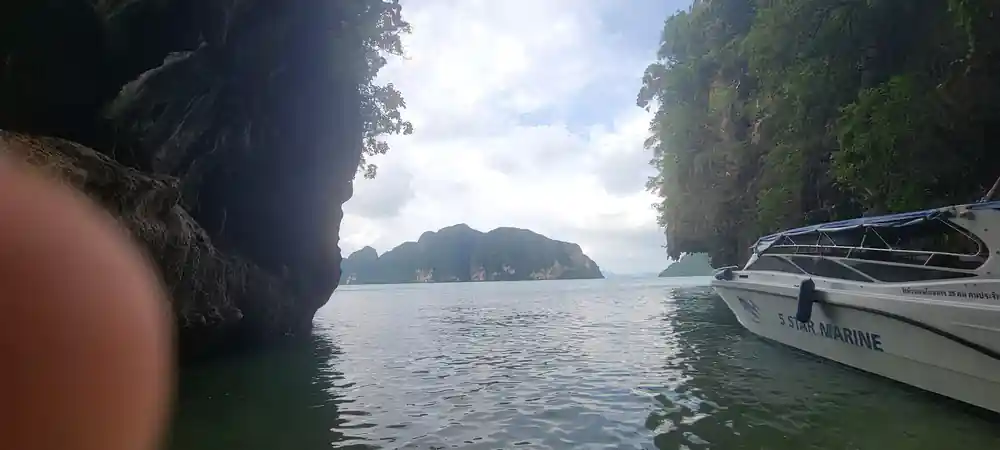
The sea canoes used on this tour are shallow-draft vessels, typically 8 to 10 meters long, that can navigate passages as shallow as 1.5 meters. This allows access to channels that larger speedboats cannot enter, but it also means greater precision is required. A wrong turn of just a few degrees can put the boat's bow toward a limestone wall hidden in darkness. The crews' ability to read the bay at night is developed through repeated passage, seasonal familiarity with water levels, and attentiveness to the subtle cues the bay provides: the sound of water, the feel of currents, the texture of the air reflecting off stone ahead.
Bioluminescent Plankton and the Glowing Wake
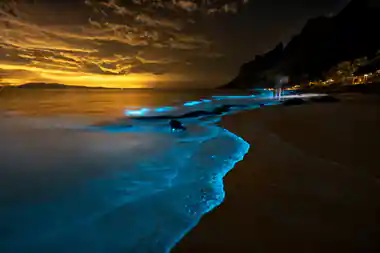
Between 8:00 and 9:00 p.m., as the tour reaches its nocturnal centerpiece, the water itself begins to glow. Bioluminescent plankton, dinoflagellates that produce light when disturbed, create a luminescent trail behind the sea canoe. The intensity of this glow depends on plankton density, which varies seasonally and nightly. On favorable nights, every stroke of the paddle produces a trail of blue-green light. The wake of the boat glows like a path of captured starlight, and small movements in the water reveal previously invisible currents and eddies through their phosphorescent signature.
This phenomenon is strongest in waters undisturbed by the daytime traffic of speedboats and dozens of canoes. The quiet channels your crew navigates after dark offer some of the best viewing conditions in the bay. The water temperature, now around 26°C, remains warm enough for comfort. Many visitors lean over the side of the canoe to watch the glow, or paddle slowly to draw out the effect. The bioluminescence persists for several hours into the night, gradually diminishing as the plankton tire from repeated stimulation. This is the visual climax of the evening, the moment when darkness reveals something invisible in daylight.
Book your evening voyage into bioluminescence
from US$89Reserve now & pay later