At a glance
- Watch these intelligent primates in their natural habitat on Panak and Ko Hong islands. Observe from a respectful distance and never feed them.
- Spot these majestic hunters soaring over the bay at dusk, diving for fish across the mangrove channels and open waters.
- Encounter colonies of bats roosting inside sea caves throughout Phang Nga Bay, active during twilight hours as you paddle by.
- Discover peculiar fish that walk on mud, crabs in root systems, and countless creatures adapted to the unique mangrove ecosystem.
- Watch microscopic plankton ignite with blue-green light around your boat at night. Let nature enchant you without disturbing wildlife.
Macaque Troops of Panak and Ko Hong
The limestone islands dotting Phang Nga Bay are home to troops of long-tailed macaques, primates that have adapted to life among mangrove forests and rocky outcrops. Panak Island and Ko Hong both support resident populations that visitors encounter during the daylight portion of the tour. These macaques are wild animals, not tame residents, and they retain natural wariness of humans despite regular boat traffic through the bay. Observing them from a respectful distance offers insight into their social hierarchies, foraging behaviour, and the way they navigate between islands by swimming.
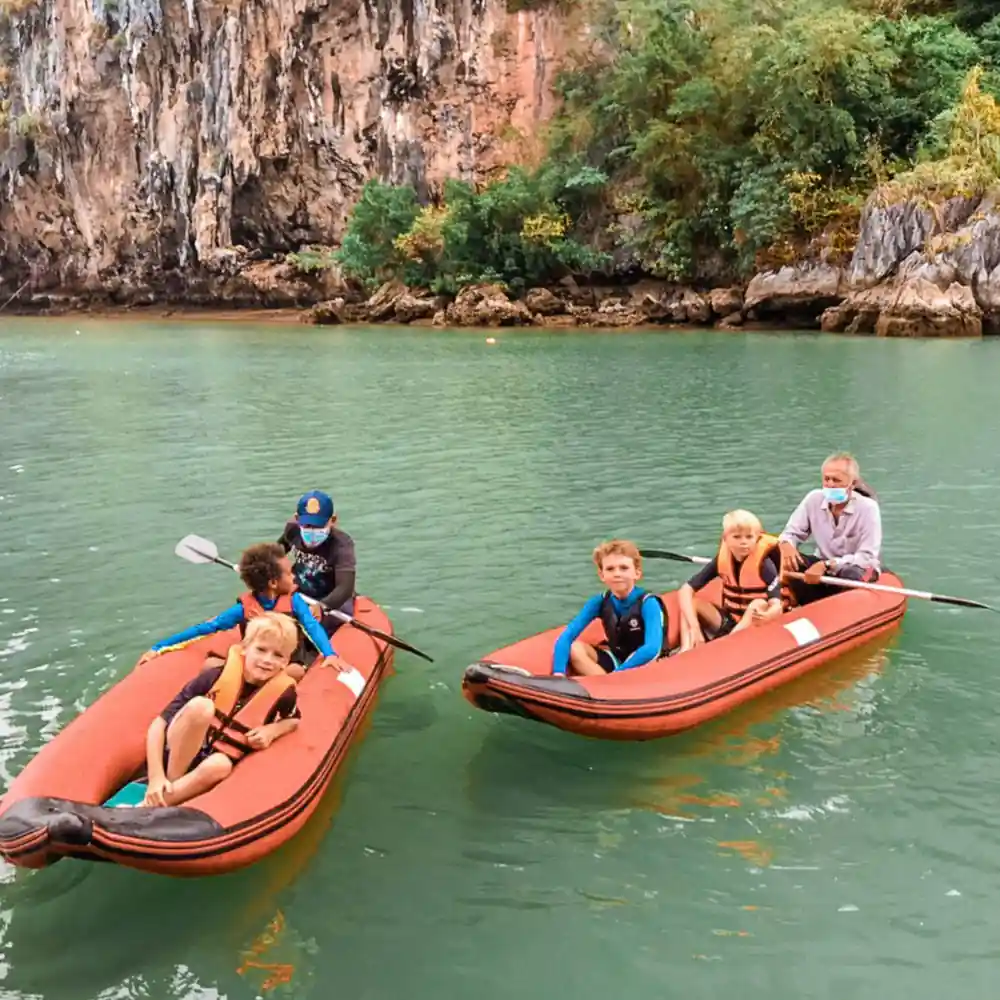
A common question among visitors is whether the macaques are dangerous or should be fed. The answer is firm: feeding disrupts their natural diet and can create dependency, altering their behaviour in ways that harm both the animals and future visitors. The troops are most active in early morning and late afternoon, when they feed on fruits, seeds, leaves, and occasionally crabs found in shallow water. During your sea canoe exploration of the islands, your guide will point out active troops and explain their role in the bay's ecosystem, including how they disperse seeds through the mangrove and forest zones.
Raptors Hunting at Dusk
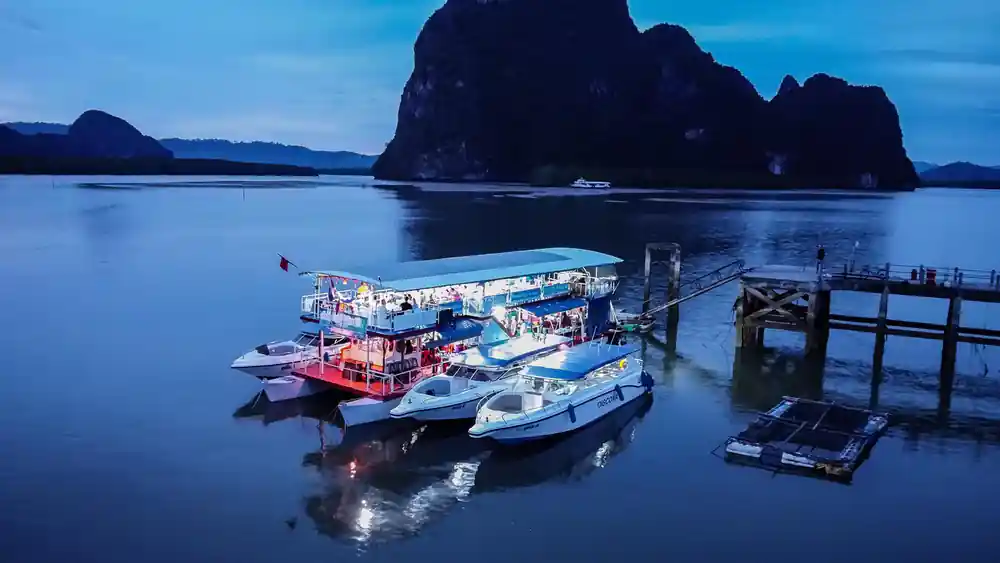
As daylight fades and the tour transitions toward the bioluminescent plankton experience, the bay becomes a hunting ground for sea eagles and other raptors. White-bellied sea eagles, identifiable by their pale plumage and powerful silhouettes, patrol the water in search of fish near the surface. Their hunting technique involves sudden dives from considerable heights, striking with talons at prey they spot from the air. The bay's shallow waters and abundant fish populations make it an ideal feeding territory, and visitors often witness these dramatic aerial displays during the evening hours.
Brahminy kites, another common raptor in the region, also hunt over Phang Nga Bay during the transition to dusk. These birds of prey favour perching on tall trees at the island edges before launching hunting runs across open water. The presence of these raptors reflects the bay's ecological health and the availability of prey fish species that support a viable predator population. Watching these hunters work the water at twilight provides a vivid connection to the natural rhythms that govern life in the bay.










Bats and Swiftlets Inside Sea Caves
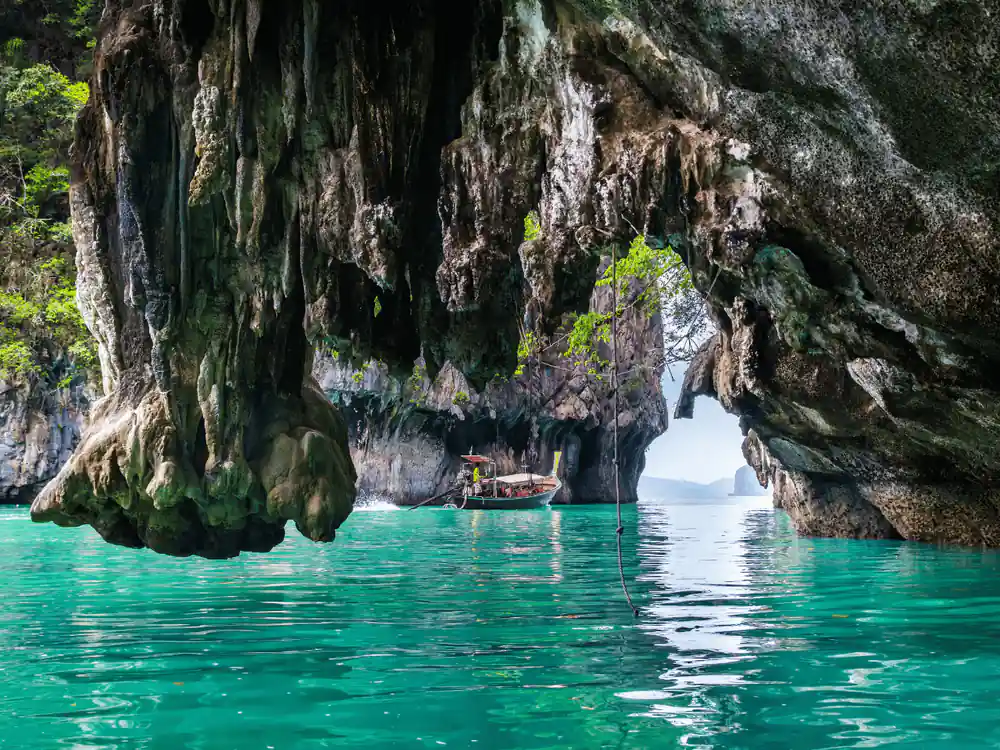
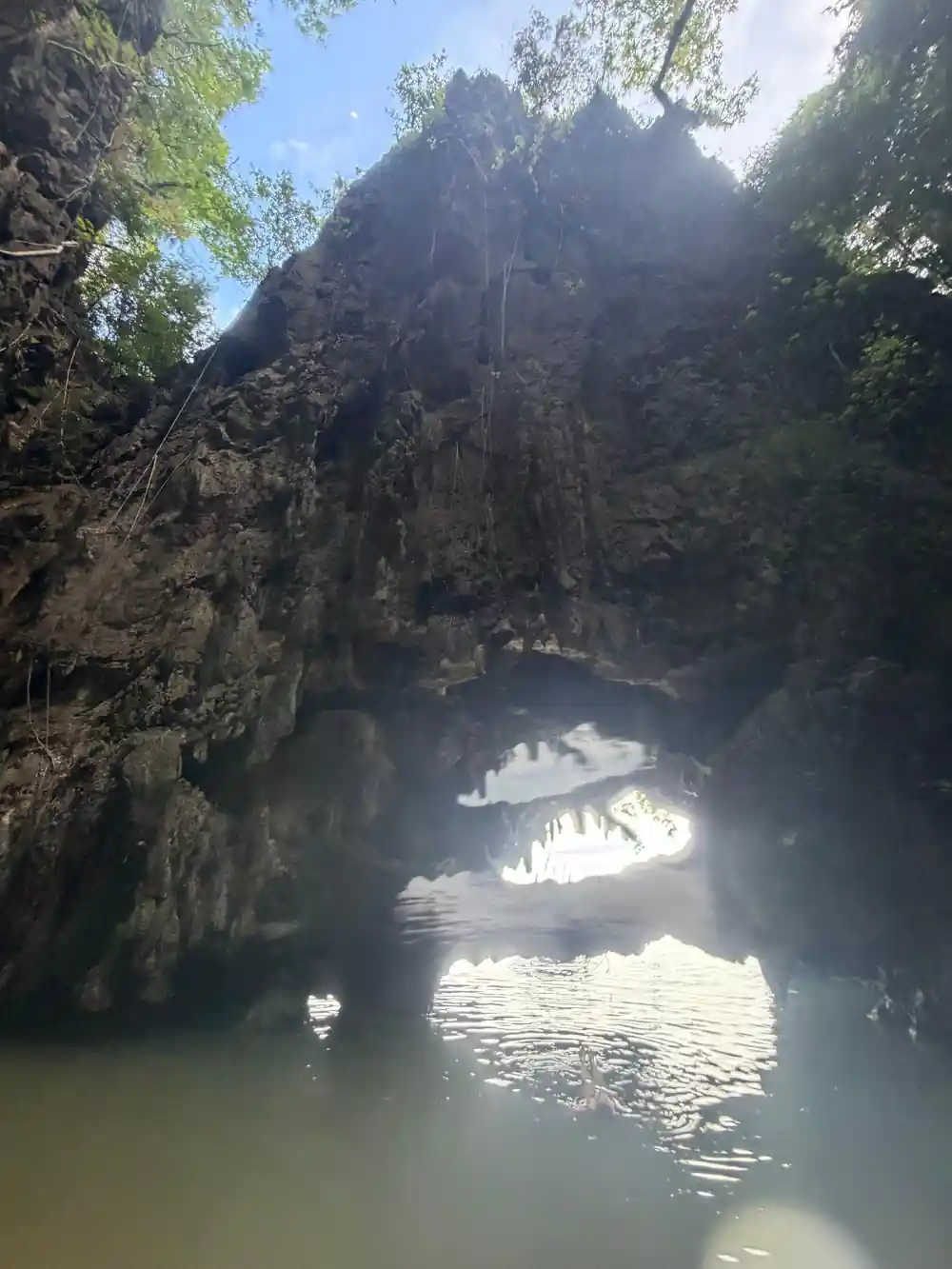
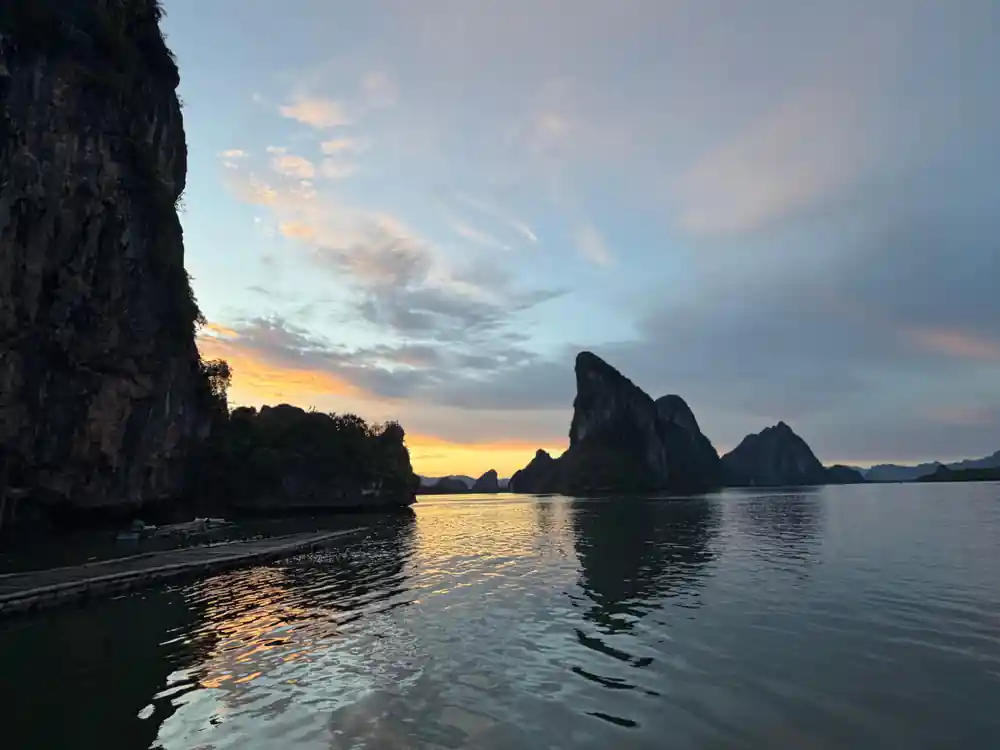
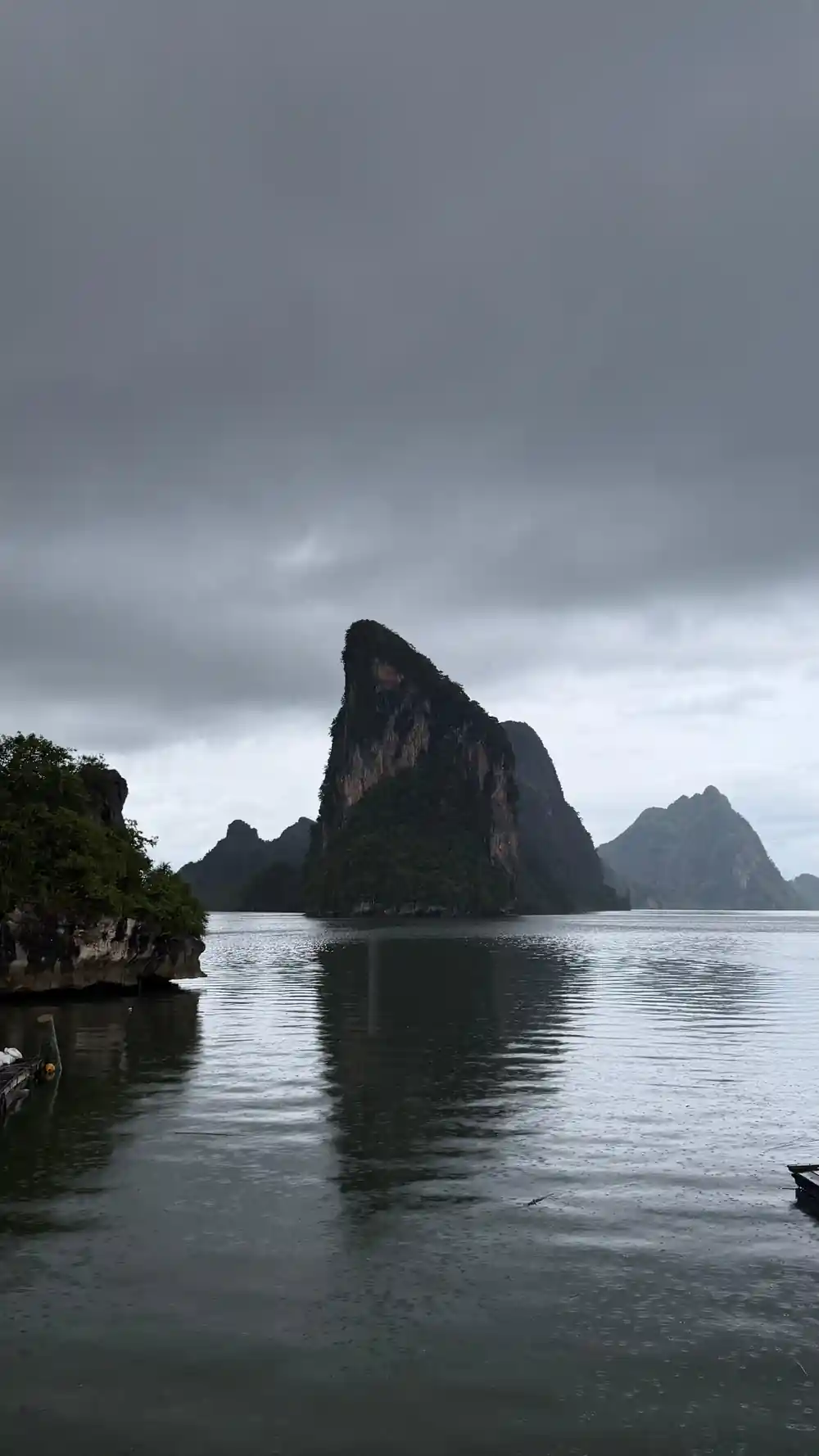
Phang Nga Bay's dramatic limestone formations contain numerous sea caves, many of which serve as roosting sites for bat colonies and nesting grounds for swiftlets. During passages through cave systems, visitors often observe these creatures in their natural habitat. Several bat species inhabit the region, including insectivorous varieties that emerge at dusk to hunt flying insects above the water. Their echolocation clicks are sometimes audible to keen listeners, a reminder of the sophisticated sensory systems these mammals use to navigate complete darkness.
Swiftlets, small birds related to swallows, construct nests from hardened saliva inside the caves. These nests are collected by local harvesters for use in bird's nest soup, a practice regulated by the national park to prevent overexploitation. The birds themselves are graceful fliers, darting through cave entrances and across open water to catch insects in flight. The presence of both bats and swiftlets indicates that the caves provide suitable environmental conditions, including stable temperature, humidity, and adequate insect populations to support these species.
Life in Mangrove Root Systems
The mangrove forests fringing the islands and bay edges create a nursery habitat where roots extend into shallow water, forming intricate three-dimensional structures. This environment supports countless creatures adapted to the interface between land and sea. Mudskippers, small fish with the ability to move across mud and breathe air through their skin, inhabit the lowest zones where roots meet substrate. Crabs of multiple species, from small mud crabs to larger varieties, find shelter and food among the root tangles. Juvenile fish use the protective cover of mangrove roots as a refuge while they grow, before migrating to deeper waters.
Snakes, including sea snakes and species that forage in mangrove zones, are present in the bay ecosystem, though encounters during typical tours are rare. Monitor lizards also inhabit some of the larger islands, moving through both mangrove and drier forest zones in search of prey. The mangrove system itself produces nutrients that support the entire food web, as decaying leaves and plant material become food for invertebrates and small fish. Your guide can point out these interconnected relationships as the tour moves through areas where mangroves are visible, highlighting how this forest type is essential to the bay's productivity.
400
Phang Nga Bay National Park protects over 400 square kilometres of mangrove forests, limestone islands, and thriving marine ecosystems.
Fish and Bioluminescent Plankton at Night
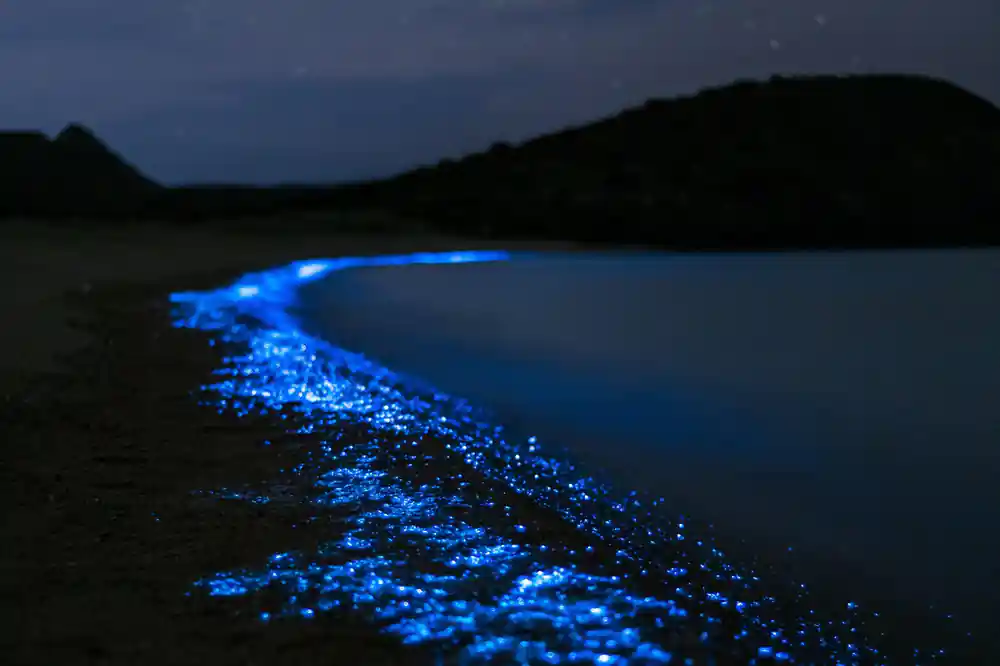
The evening bioluminescent plankton experience reveals a hidden layer of the bay's biology invisible during daylight hours. When the speedboat slows and enters calm waters far from city light pollution, microscopic dinoflagellates and other organisms flash with blue-green light in response to disturbance. Movement of oars, hands, or the boat itself triggers these organisms to produce their own illumination, a defence mechanism that creates an otherworldly effect. The plankton are living creatures, not a chemical reaction, and their presence indicates healthy water conditions and rich nutrient availability.
Fish are attracted to the illuminated water, drawn by the plankton's movement and light emissions. Schools of small fish gather around the boat, creating trails of glowing water as they swim. Larger fish occasionally become visible in the lit zone, hunting the smaller species drawn to the plankton. This nightly spectacle demonstrates how energy flows through the bay's food web and how creatures have adapted to exploit the available resources across every hour of the day. The bioluminescence is strongest on clear, moonless nights far from artificial light sources, so environmental conditions specific to your tour date and time will influence the intensity of the display.
Monitor Lizards and Island Reptiles
Monitor lizards are large reptiles that inhabit several of the limestone islands within Phang Nga Bay, though sightings during standard tours are not guaranteed. These impressive predators can reach lengths of up to 1.5 metres and feed on smaller animals, eggs, and carrion. They are most active during cooler hours, particularly early morning and late afternoon, and often remain hidden in rocky crevices or under dense vegetation during peak heat. The presence of monitor lizards indicates a healthy prey base and minimal disturbance to island habitats, making them an indicator species for ecosystem health.
Sea snakes and freshwater snakes also occur in the bay region, though they generally avoid human contact and are rarely encountered by tour participants. Their presence reflects the bay's connections to both marine and terrestrial ecosystems. The national park's protection status has allowed reptile populations to persist and, in many cases, recover from historical overhunting. Your guide can discuss the role these predators play in controlling rodent and small animal populations, preventing overabundance that could damage vegetation or introduce disease.
National Park Protection and Wildlife Management
Phang Nga Bay's designation as a national park provides legal framework for wildlife protection and habitat management. The park's regulations restrict boat access to designated channels, protect nesting areas for birds and sea turtles, and regulate activities such as fishing and collection of cave fauna. Park fees collected from visitors directly fund conservation efforts, including habitat restoration, ranger patrols to prevent poaching, and monitoring programmes that track population trends for key species. This funding model creates economic incentive for local communities to maintain the bay's natural value rather than exploit it unsustainably.
Management strategies focus on maintaining the balance between tourism access and wildlife disturbance, with designated tour routes designed to minimise impact on sensitive areas. Research conducted within the park has documented the effects of tourism and established best practices for visitor behaviour. Educational components of tours, including guide commentary about wildlife and conservation, help visitors understand the fragility of tropical marine ecosystems and the shared responsibility for their protection. The 8-hour tour is designed to provide wildlife observation opportunities while adhering to these protective guidelines, allowing you to experience the bay's living communities while supporting the systems that sustain them.
See the Bay Come Alive After Dark
from US$89Reserve now & pay later