At a glance
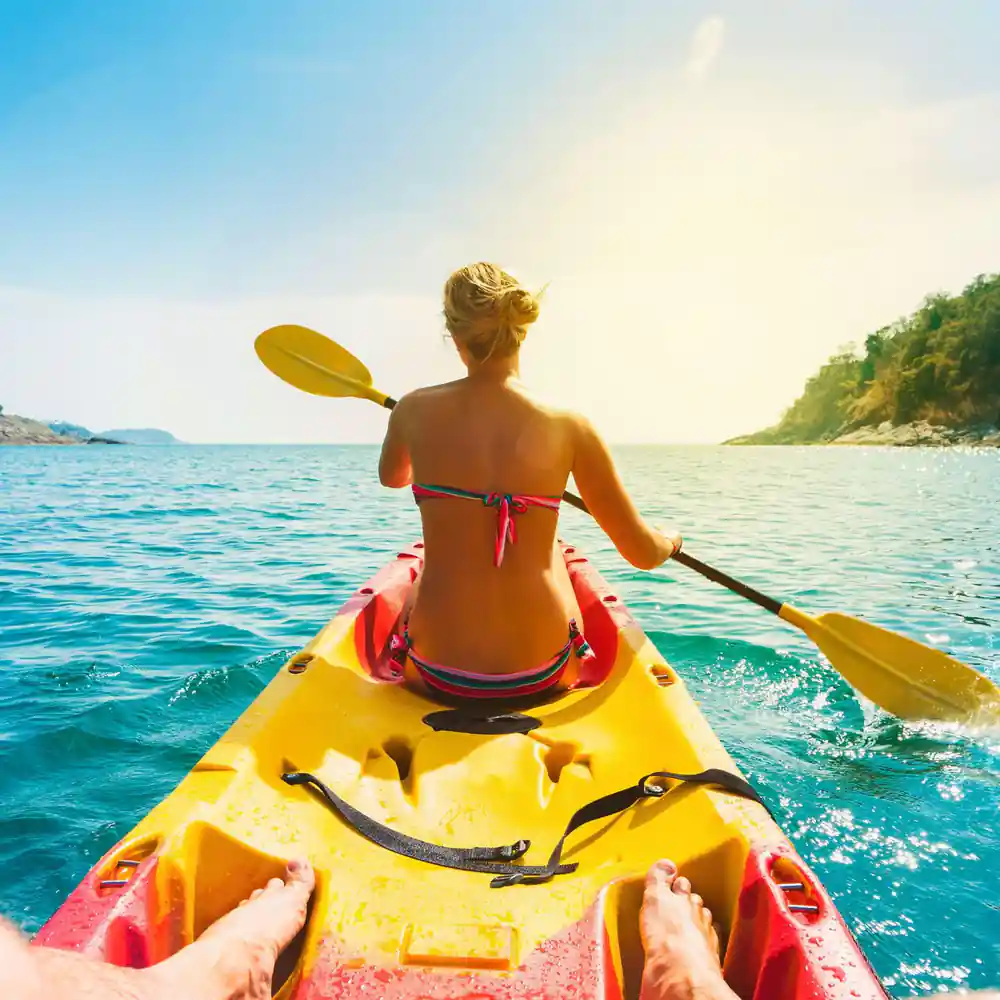
- Guides handle paddling in Phang Nga Bay kayaks while you relax and take in the scenery from your seat in the canoe.
- Each sea canoe accommodates two passengers plus one guide, ensuring stability and comfort throughout your journey.
- Life jackets are supplied and worn both in the canoe and during the night swim with bioluminescent plankton.
- After sunset, you'll enter the water with your guide's assistance, paddle gently to observe glowing plankton, then return to the boat.
- Low cave entrances require you to crouch or recline briefly as the guide manoeuvres the canoe through narrow passages safely.
What You'll Paddle: Sea Canoes vs. Traditional Kayaks
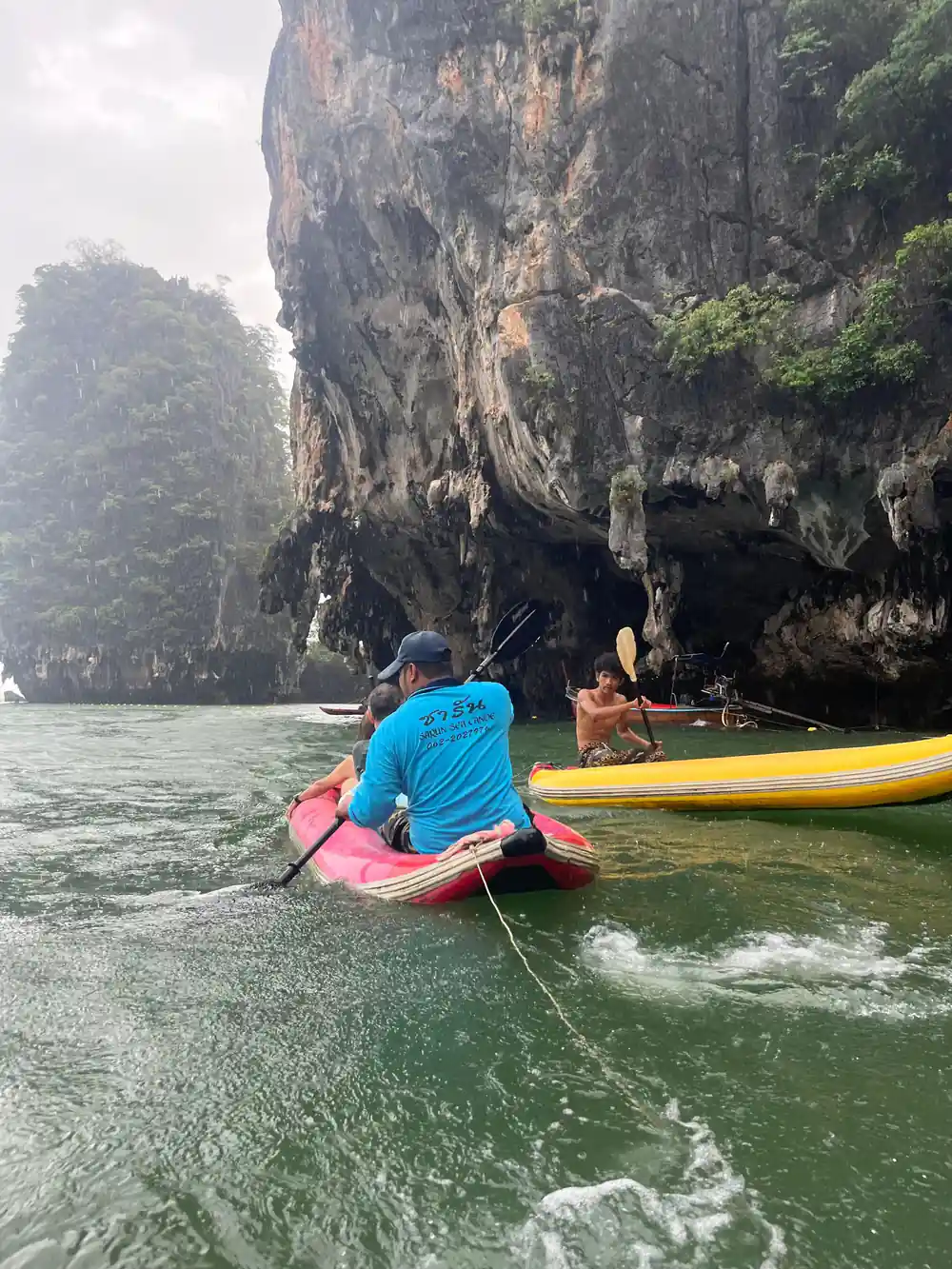
The vessels used on this tour are inflatable sea canoes, which differ fundamentally from a kayak one person might rent at a typical beach resort. While a kayak one person operates independently with a double-bladed paddle, these sea canoes are wider, more stable craft designed for two passengers plus a guide. The canoes feature an open cockpit design rather than the enclosed seating of a kayak, giving you better visibility of the limestone cliffs and water around you. The inflatable construction provides exceptional buoyancy and shock absorption as you navigate the shallow waters and rocky passages of Phang Nga Bay.
Canoeing vs kayaking differences become apparent immediately once you're on the water. Sea canoes sit lower in the water than kayaks, making them easier to board from a speedboat and more suitable for exploring caves where overhead clearance is tight. The stability of these wider hulls means less experienced paddlers can feel confident, even in areas where the water deepens unexpectedly. Each canoe typically carries two passengers who share paddling duties, plus your guide who steers from the rear position and provides propulsion when needed.
Who Paddles and How the Seating Works
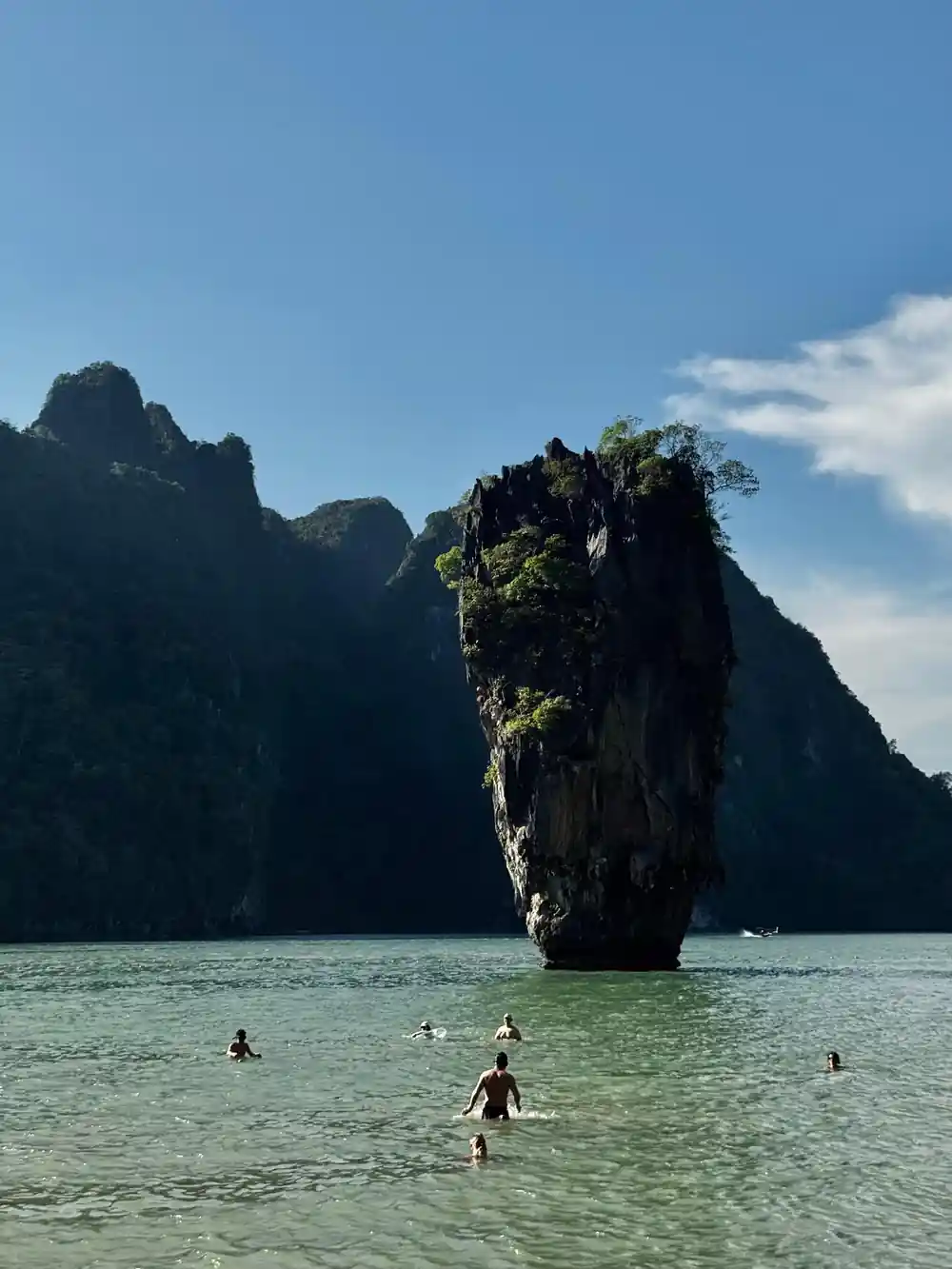
Your guide will handle steering and much of the forward propulsion, positioned at the rear of the canoe with a single-bladed paddle. You and your fellow passenger sit in the forward and middle sections, where you'll take turns paddling or simply trail your paddles in the water while your guide manages the navigation. This arrangement means you're not responsible for keeping the canoe on course, which is especially valuable when entering narrow cave passages or approaching James Bond Island where precision matters. The guide reads the tides, currents, and rock formations, allowing you to focus on the experience rather than the mechanics.
Communication with your guide is constant and informal. If you feel tired, simply rest your paddle across the gunwales and let the guide provide the power. If you want to paddle more actively, your guide will encourage it and show you the most effective stroke technique for these conditions. How long canoe expeditions last on this tour is eight hours total, but actual paddling time is interspersed with drifting, floating, and moments of stillness as you observe the landscape and prepare for the evening's bioluminescent experience.
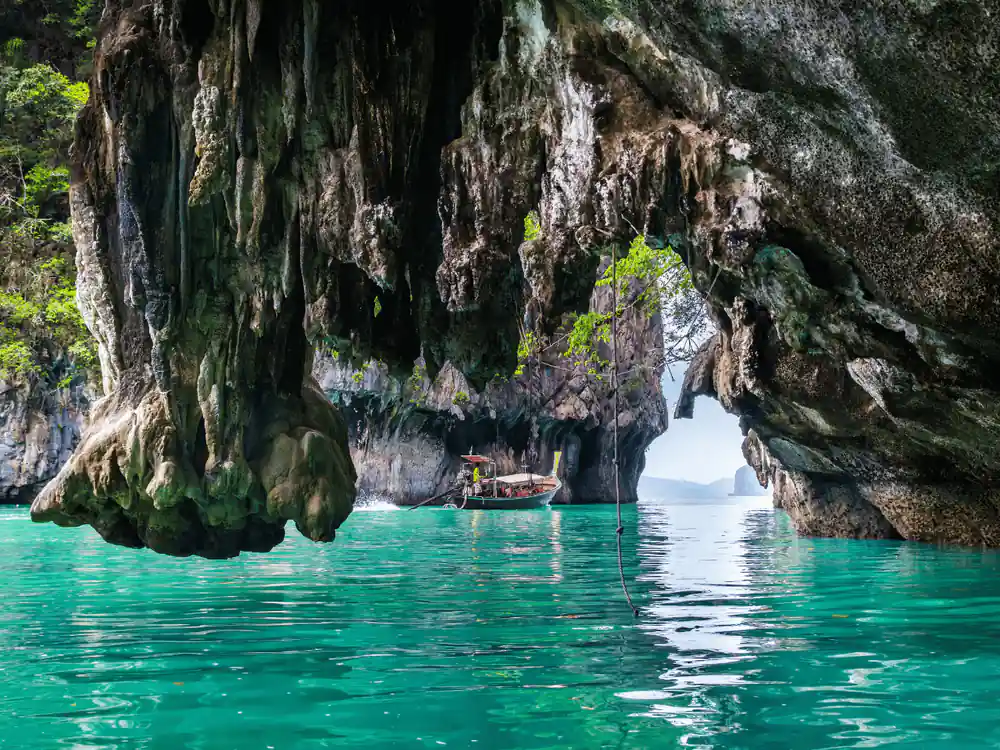
Paddlers duck low beneath limestone as canoe glides through cave
Entering Caves: The Lie-Flat Posture and Low Clearances
Several sea caves in Phang Nga Bay require you to lie flat against the canoe to pass beneath overhanging rock formations. This posture isn't a sign of danger but rather a practical necessity in passages where the limestone ceiling drops within inches of the water's surface. Your guide will signal well in advance when a low passage approaches, giving you time to position yourself. You'll lie back along the canoe's bottom, keeping your body weight centered, while the guide uses a slow, controlled paddle stroke to propel the craft through. The passage typically lasts only seconds to a minute, and emerging on the other side opens into a hidden lagoon or chamber.
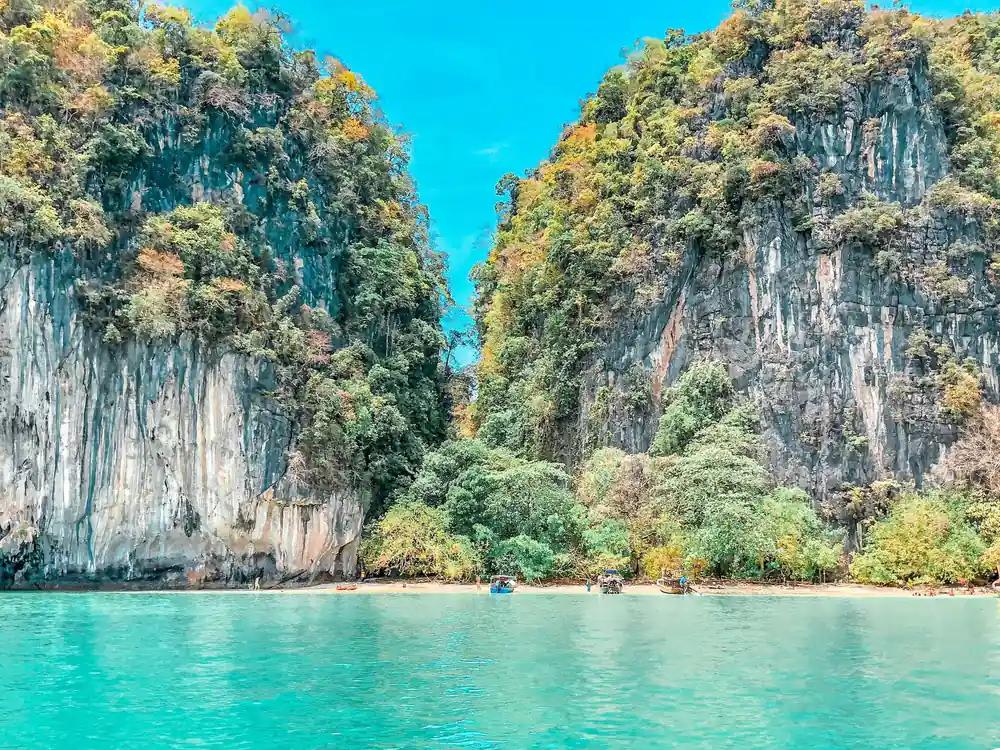
These cave sections are among the tour's highlights, revealing rock formations sculpted over millennia and occasionally small populations of fish and crustaceans adapted to the cave environment. Your guide will point out geological features and explain the limestone geology of the region. The clearance is always measured and safe; guides navigate these passages daily and know the exact depth of water and height of overhangs. The sensation is memorable but not claustrophobic for most visitors, though knowing what to expect helps you relax into the experience.
Stability, Tipping, and What Happens If You Capsize
Inflatable sea canoes are remarkably stable in calm and moderate conditions. The wide hull distributes weight evenly, and the buoyancy chambers ensure the canoe won't sink even if punctured. Tipping over is unlikely during normal paddling but remains possible if you shift your weight suddenly, stand up without warning, or encounter an unexpected swell. Should a canoe tip, the guide and passengers will immediately find themselves in the water alongside the overturned vessel. All occupants are wearing life jackets, and the guide is trained in quick recovery procedures.
In the rare event of a capsize, your guide will right the canoe using practiced technique, which takes only a minute or two. Passengers then re-enter from the water with assistance, and the guide will verify that everyone is uninjured before proceeding. Phang Nga Bay is shallow by open-sea standards, typically 5 to 10 metres, which is still well over your head, and speedboats remain within visual range throughout the tour as backup support. Tipping is not a realistic risk for anyone following basic instructions about weight distribution and staying seated, but understanding the recovery process removes any anxiety.
60
Sea canoes accommodate two passengers plus one guide, with cave entrances requiring less than 60 centimetres of headroom at low tide.
Life Jackets, Safety Equipment, and Wearing Them in Water
Safety equipment is provided for every passenger and includes a properly fitted life jacket that must be worn throughout the canoe portion of the tour. These are not optional; your guide will ensure the fit is snug but comfortable before you leave the dock at Phuket Boat Lagoon. The jackets are designed for the tropical climate and allow full range of motion for paddling. You'll wear the life jacket both in the canoe and if you enter the water, whether intentionally for the night swim or accidentally through a capsize.
The life jackets used on this tour meet international safety standards and provide 15 to 17 kilograms of buoyancy, enough to keep your head above water even if you're unconscious. Guides regularly check that straps remain secure, especially after lying flat in caves or during transitions between the speedboat and canoe. Additional safety equipment stored in the canoe includes a first-aid kit, signaling devices, and communication equipment. Your guide carries training in first aid and rescue technique, ensuring rapid response to any incident.
The Night Swim Among Bioluminescent Plankton
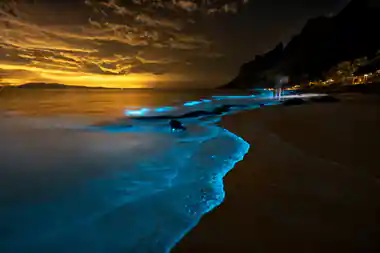
After paddling and cave exploration, the tour culminates in a night swim in waters hosting millions of dinoflagellates, the organisms responsible for the bioluminescence. Your guide will select a location with optimal conditions, typically in a sheltered bay where the plankton concentration is highest. You'll enter the water in your life jacket under the direction of your guide, and as you move slowly, the plankton will emit an ethereal blue-green glow in response to the disturbance. Your hands, legs, and body will create trails of light, and each ripple becomes visible as a cascade of tiny stars.
The night swim lasts approximately 20 to 30 minutes, allowing time to acclimate to the darkness and fully experience the phenomenon. Guides ask swimmers to move slowly and deliberately to maximize the visual effect and avoid startling small fish or jellyfish. The water is warm, typically between 27 and 29 degrees Celsius, and the shallow depth means you can stand if desired. After the swim, you'll rinse with fresh water provided onboard before the return to shore, with a Thai-style dinner served at a pier-side restaurant or boat before your return to your Phuket hotel.
Managing Seasickness and Claustrophobia Concerns
The speedboat journey to Phang Nga Bay is 45 minutes to an hour across the Andaman Sea, and some passengers experience motion sickness despite generally calm conditions in the region. If you're prone to seasickness, inform your guide before departure; preventive measures include focusing on the horizon, staying in the middle of the boat where motion is least pronounced, and eating light snacks. Ginger, acupressure wristbands, or over-the-counter motion sickness medication taken before departure can be effective. The return journey is shorter and occurs after you've acclimated, so most people find the way back easier than the outbound trip.
Concerns about claustrophobia in sea caves are common but rarely materialize. The cave passages are brief, well-lit by daylight reflecting off the water, and you remain in contact with your guide and the open water. You can see daylight ahead throughout each passage, and the guide controls the pace. If you feel anxious approaching a cave, communicate this to your guide, who may suggest staying in the canoe while the guide paddles through, or simply skipping that particular passage in favor of other attractions. The tour includes multiple highlights beyond cave exploration, ensuring a rewarding experience regardless.
No paddling experience? Start here.
from US$89Reserve now & pay later
Board from the speedboat
Transfer to your sea canoe at the lagoon
Your guide helps you move from the speedboat into a stable two-person sea canoe. Life jackets are fitted and checked before departure.
Paddle toward the hong entrance
You and your guide paddle across calm water toward the cave opening. The guide positions the canoe and prepares you for the low passage ahead.
Lie back to enter the narrow opening
The cave entrance requires you to recline in the canoe as it glides through. Your guide controls the paddle and steers you safely into the hong.
Float within the limestone cathedral
You drift inside the enclosed lagoon surrounded by towering rock walls. The guide paddles slowly while you take in the dramatic natural formations.
Reverse through the cave entrance
Your guide carefully backs the canoe toward the opening. You remain reclined as you exit, then sit upright once clear of the narrow passage.
Paddle back to the speedboat
The guide navigates you across the bay to rejoin the group. Life jackets stay on until you board the speedboat for the next destination.