At a glance
- Ko Tapu, Khao Phing Kan, and James Bond Island all refer to the same limestone pinnacle in Phang Nga Bay, Thailand's most photographed natural landmark.
- A 1974 James Bond movie brought international fame to this remote rock, transforming it from a local geographic feature into a global tourist destination.
- Access to the pinnacle itself is restricted today. Visitors view and photograph Ko Tapu from boats and nearby islands during guided tours of Phang Nga Bay.
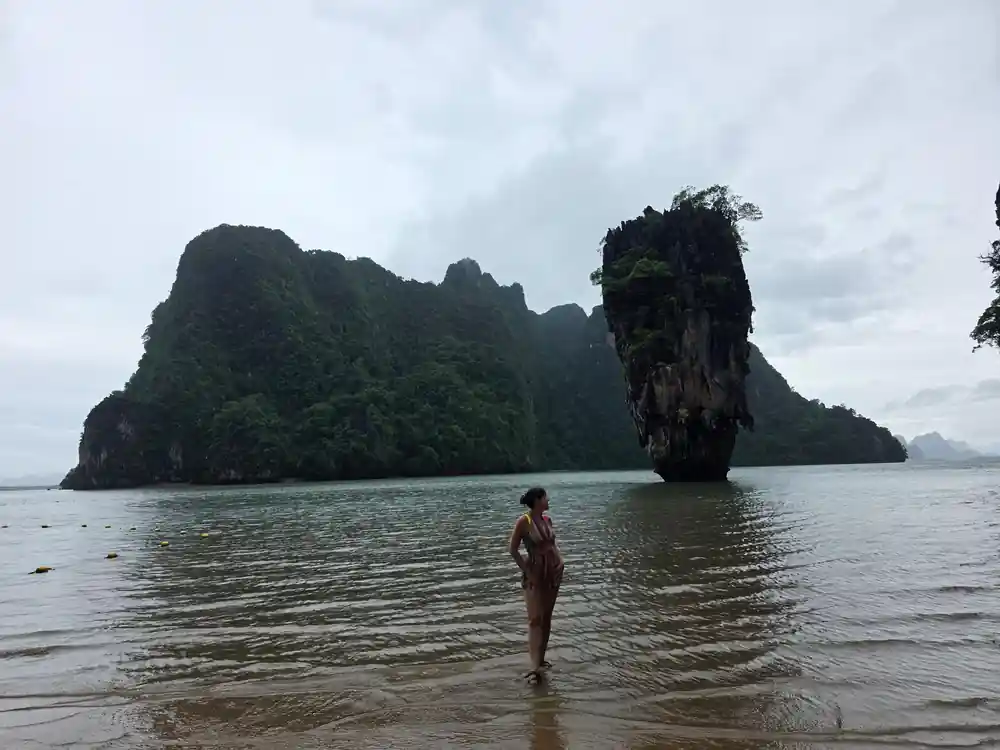
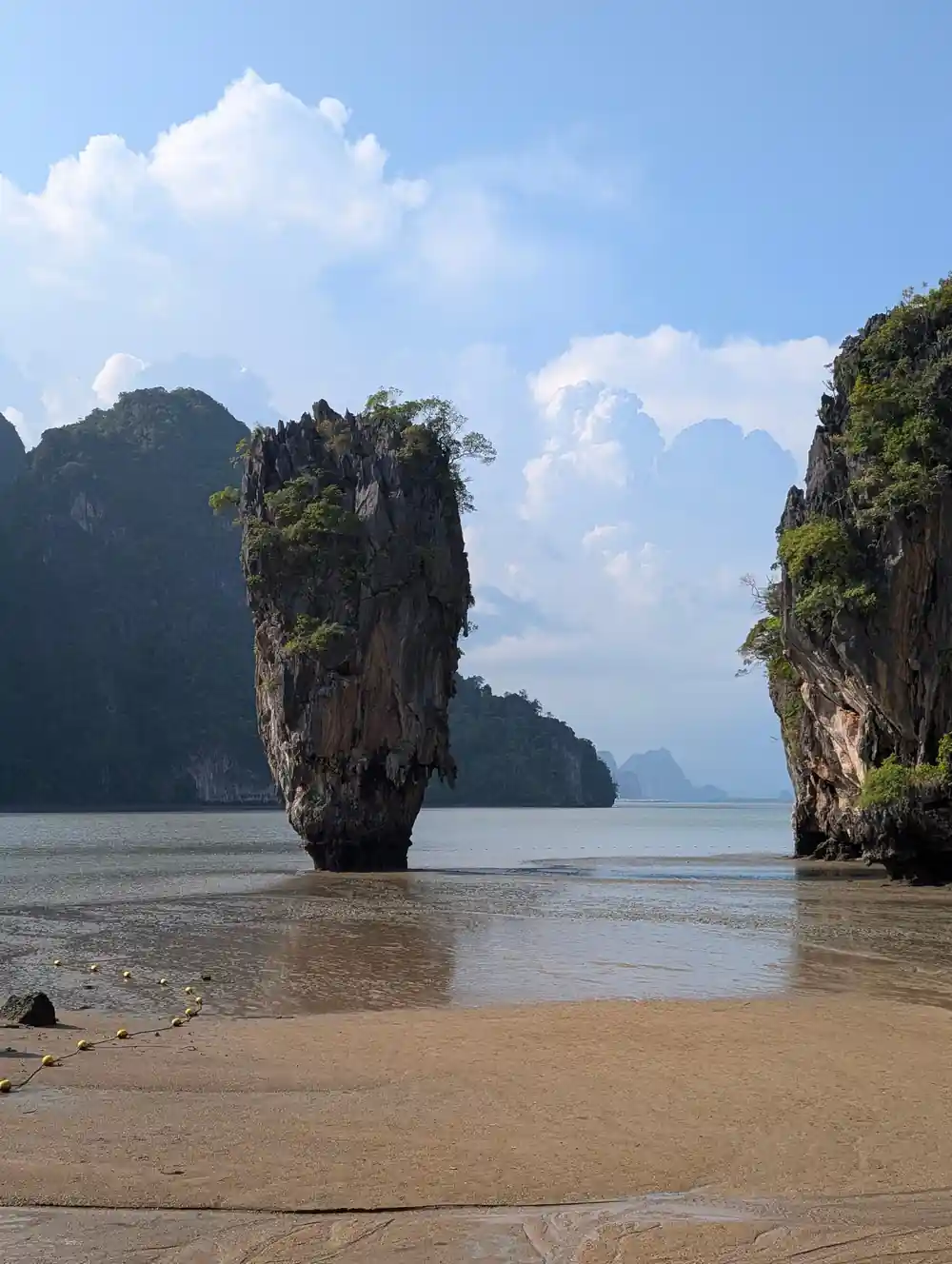
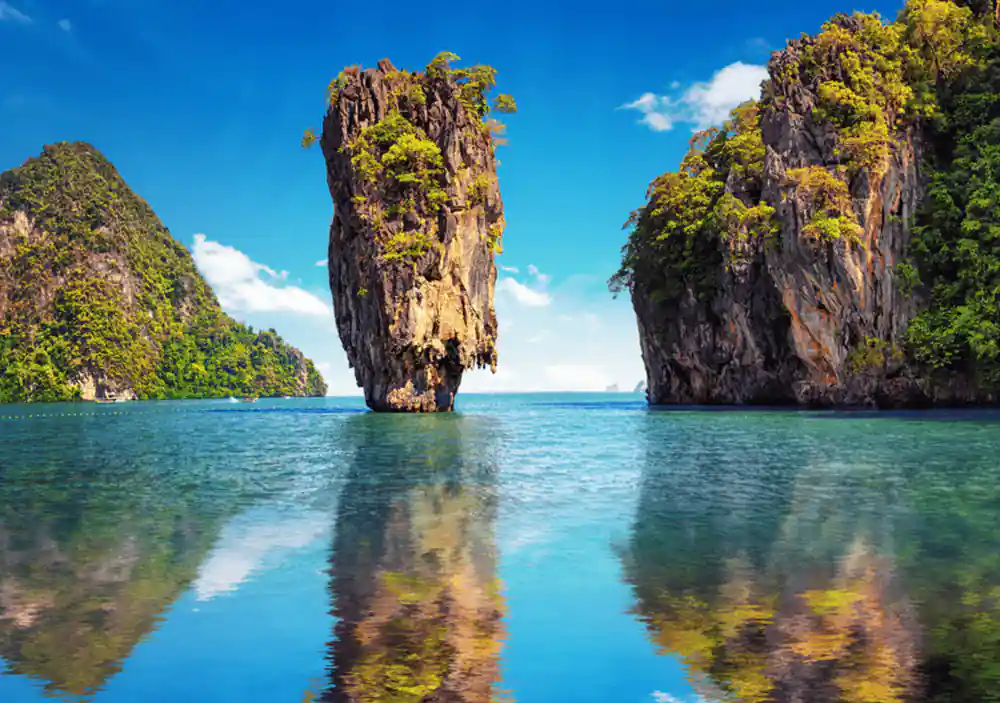
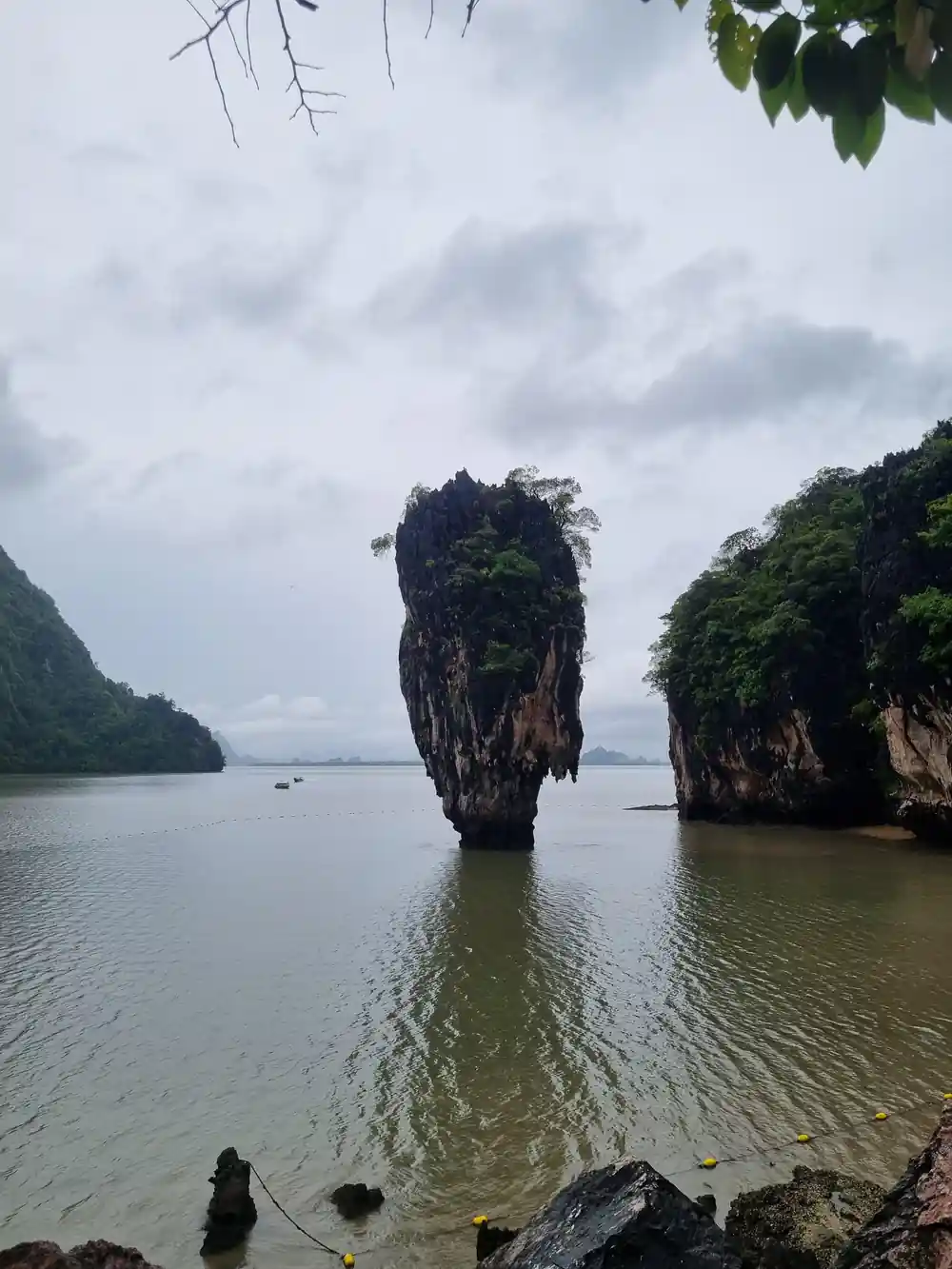
- The limestone stack appears smaller and more crowded than in classic photographs. Afternoon light creates different angles and reflections than the famous golden-hour images.
- The pinnacle leans noticeably and continues to erode from wave action and weathering. Its distinctive tilt deepens year by year, reshaping the iconic silhouette.
A limestone pinnacle before the cameras arrived
Ko Tapu, the slender rock formation that rises about 20 metres from the waters of Phang Nga Bay, was not always the world's most photographed island. Before 1974, it stood as one of countless limestone karsts dotting the bay, known locally by a name now largely forgotten. Thai fishermen and boatmen passed it routinely; the dramatic geology of the region was unremarkable to those who lived among it. The rock itself bears witness to millions of years of tidal erosion, its needle-like shape the result of relentless water and weather sculpting softer stone away. Local legend spoke of Ko Tapu as a place of spiritual significance, though the stories varied among the villages scattered across the bay. What drew people to Phang Nga Bay in those early decades was not celebrity but the landscape itself: the sheer limestone walls, the hidden lagoons accessible only by canoe, and the sense of entering a world untouched by time.
The bay's reputation among adventurers and photographers was already growing. Geologists and explorers had documented the karst formations, and a few tourist boats were beginning to navigate the waters. Yet Ko Tapu remained one feature among many, notable more for its precarious angle than for any reason that would explain the millions of visitors who would later arrive. The rock leaned then as it leans now, a consequence of the same geological forces that had shaped it. Few could have predicted that a single film production would transform this anonymous limestone spire into a symbol recognized across the globe.
The 1974 film and what was actually shot here
In 1974, the James Bond production team selected Phang Nga Bay as the setting for 'The Man with the Golden Gun', the ninth film in the series. The producers scouted the location for its dramatic visual properties: the towering karsts, the emerald water, the sense of isolation and danger. Ko Tapu, with its distinctive silhouette, was an obvious choice for the film's iconic imagery. Scenes were indeed shot in the bay itself, with the rock appearing in establishing shots and sequences filmed from speedboats. However, not every moment associated with James Bond Island was captured here. Much of the interior work took place on soundstages in Bangkok and back in the UK studios, where sets were constructed to match the bay's appearance. Key scenes involving the villain's island lair were filmed elsewhere entirely, on sets built specifically for the production. What appears seamless in the film is actually a careful blend of location shooting and studio work, a standard practice in major motion pictures of that era.
The James Bond scene that most directly featured Ko Tapu was relatively brief on screen but enormous in impact. The rock became the visual shorthand for the entire location, so completely associated with the film in the public imagination that few modern visitors realize how small a role it played in the actual story. The production's visit lasted weeks; the sequences filmed at Phang Nga Bay amounted to fragments of the finished picture. Yet those fragments were enough to cement the rock's identity worldwide. Tourism operators quickly recognized the value of the association, and within months of the film's release, boat tours began departing Phuket specifically to view 'James Bond Island', a name that did not exist before 1974.
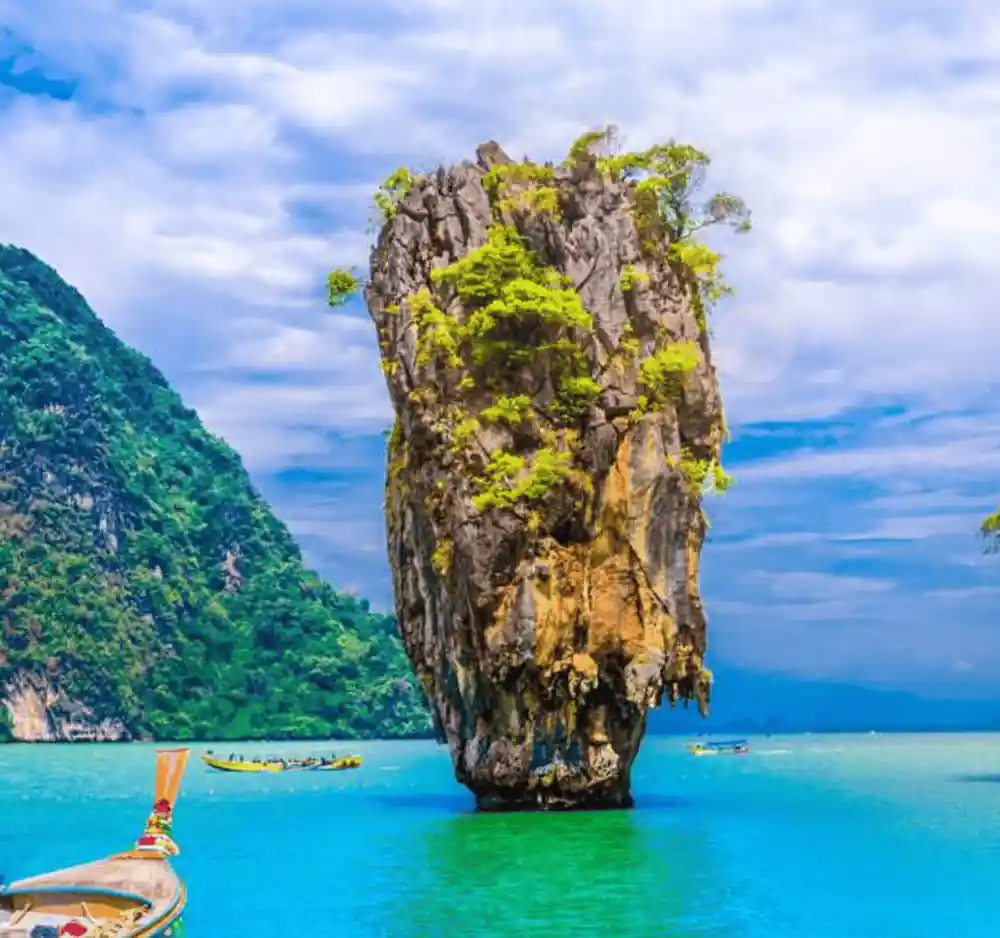
Golden hour at Ko Tapu: fewer boats, softer light, timeless rock
From local secret to international landmark
The transformation happened with remarkable speed. By the late 1970s, the boat tours to Phang Nga Bay versus James Bond Island had become a major draw for visitors to Phuket. What had been a niche attraction for geography enthusiasts became a mainstream tourist destination. Travel agents packaged it, guidebooks featured it, and the name 'James Bond Island' appeared on maps where Ko Tapu's original designation had once stood. The rock itself became inextricable from the fiction associated with it. Visitors arrived with expectations shaped not by the landscape but by the film, disappointed if the water was not precisely the shade they remembered or if the angle from their boat differed from the cinematography. The bay's natural wonders, which had drawn explorers for centuries, became secondary to the celebrity of a single rock.
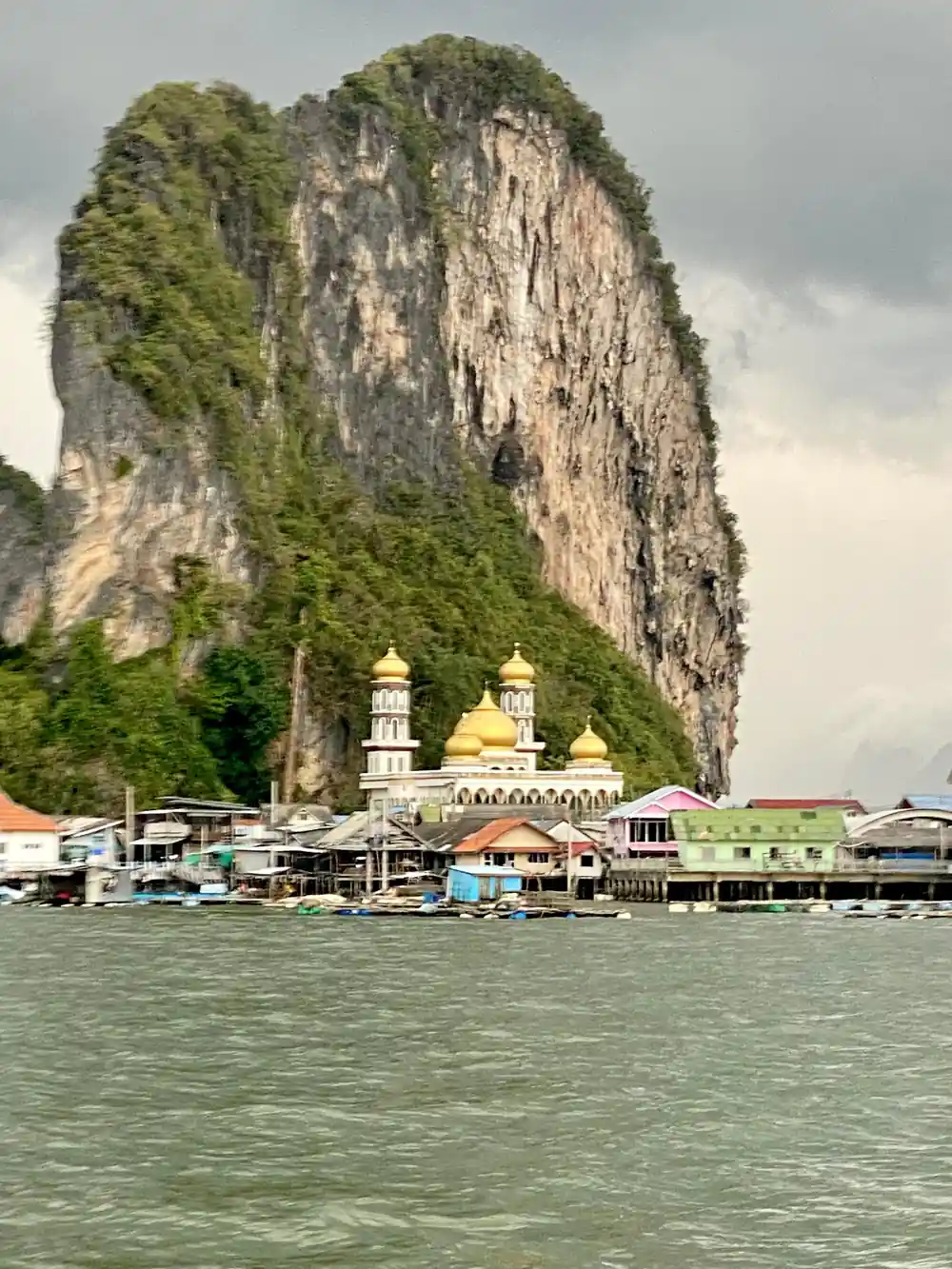
Local communities in villages like Koh Panyey, located nearby in the bay, witnessed this shift directly. Fishermen who had made their living from the water for generations suddenly found themselves part of a tourism infrastructure. Homes were adapted to accommodate visitors, boats were repurposed as tour vessels, and the rhythm of village life reorganized itself around the arrival and departure of tour groups. The changes were not unwelcome everywhere, as tourism brought income and opportunities. Yet they came with costs: the quiet of the bay was replaced by the sound of speedboat engines, traditional livelihoods became harder to maintain, and the sense of place transformed from a living fishing community to a backdrop for photographs.
Managing erosion and crowds at the rock itself
The limestone that forms Ko Tapu is porous and reactive to prolonged exposure and human contact. The rock began to show visible signs of damage within years of the film's release. Visitors clambering over it, boats anchoring against it, and the sheer volume of hands touching its surface accelerated natural erosion processes. By the early 1990s, Thai authorities recognized that the island could not sustain unlimited visitation. The solution was to restrict access: visitors can no longer walk onto Ko Tapu itself. Barriers were installed, and the rock is now viewable only from a distance, either from passing speedboats or from nearby platforms. The restriction is not absolute in practice, as determined visitors have found ways to approach, but it reflects an official policy that the rock's survival matters more than unrestricted access.
The erosion continues regardless. The pinnacle leans more noticeably now than it did in 1974, a consequence of differential weathering and the relentless work of wind and water. Scientists estimate the rock loses measurable amounts of material each year. The barriers and regulations that were once controversial are now understood as essential; without them, Ko Tapu would have crumbled far more severely by now. Tour operators working the Phang nga james bond island tour now frame the restrictions as conservation measures, educating visitors that the rock they came to see can only be preserved if it remains mostly untouched. The irony is complete: the place became famous because it was accessible and dramatic, and it survives now because access has been severely curtailed.
Photography and the afternoon light effect
One detail that surprises many visitors is how drastically Ko Tapu's appearance changes with the time of day. The rock's shadow, the quality of light reflecting off the water, and the color of the limestone itself shift dramatically between morning and late afternoon. Many photographs that circulate online and in guidebooks were taken in late afternoon, when the angle of the sun creates dramatic shadows across the rock's face and the water takes on deeper tones of blue and green. Tours departing in the morning encounter completely different lighting conditions, with the sun high and the shadows minimal. Neither version is more 'correct', but the afternoon appearance has become visually dominant in popular culture, creating an expectation that may not match the reality of a morning tour. Photographers and tour operators now schedule visits with an awareness of optimal light, understanding that the rock's fame is inseparable from its visual presentation in a specific kind of weather and at a specific time of day.
The legend and local stories of Ko Tapu
Before Hollywood, Ko Tapu held meaning in local culture and folklore. The stories varied between villages and between storytellers, as folk narratives do, but themes recurred: the rock was often associated with spiritual guardianship, with the protection of the bay or the protection of fishermen. Some accounts connected it to a princess or a noble family from centuries past. Other versions framed it as the home of a spirit or a marker of a significant event in local history. These narratives were not written down in widely circulated sources, existing instead in the oral traditions of the communities that lived alongside the formation. The arrival of tourism and the film industry did not so much erase these stories as overshadow them; they persist in local knowledge but have become largely invisible to the millions of visitors who experience Ko Tapu purely as a cinematic landmark. The rock thus holds a dual identity: a legendary place in its own region, and an international symbol in the wider world.
Visiting Ko Tapu today
Modern visitors to Phang Nga Bay encounter Ko Tapu as part of organized boat tours departing from Phuket. The full Phang nga bay man with the golden gun experience typically spans 8 hours and includes multiple stops: Panak Island for cave exploration, Ko Hong for its hidden lagoon, and passing views of the James Bond Island itself. The rock is seen but not touched, photographed from a boat or from designated viewing platforms. National Park fees are included in most tour packages, as are meals and refreshments. The experience is heavily structured and commercialized, a far cry from the solitary encounters that early explorers or fishermen might have had. Yet for most visitors, this is the only way to experience the location, and the tours are professionally managed with safety standards and environmental protections in place. The rock that once stood as an anonymous limestone formation in a remote bay is now one of Southeast Asia's most visited natural landmarks, transformed by a single film into a destination that millions make a point to see.
Experience the Bay After Dark
from US$89Reserve now & pay later